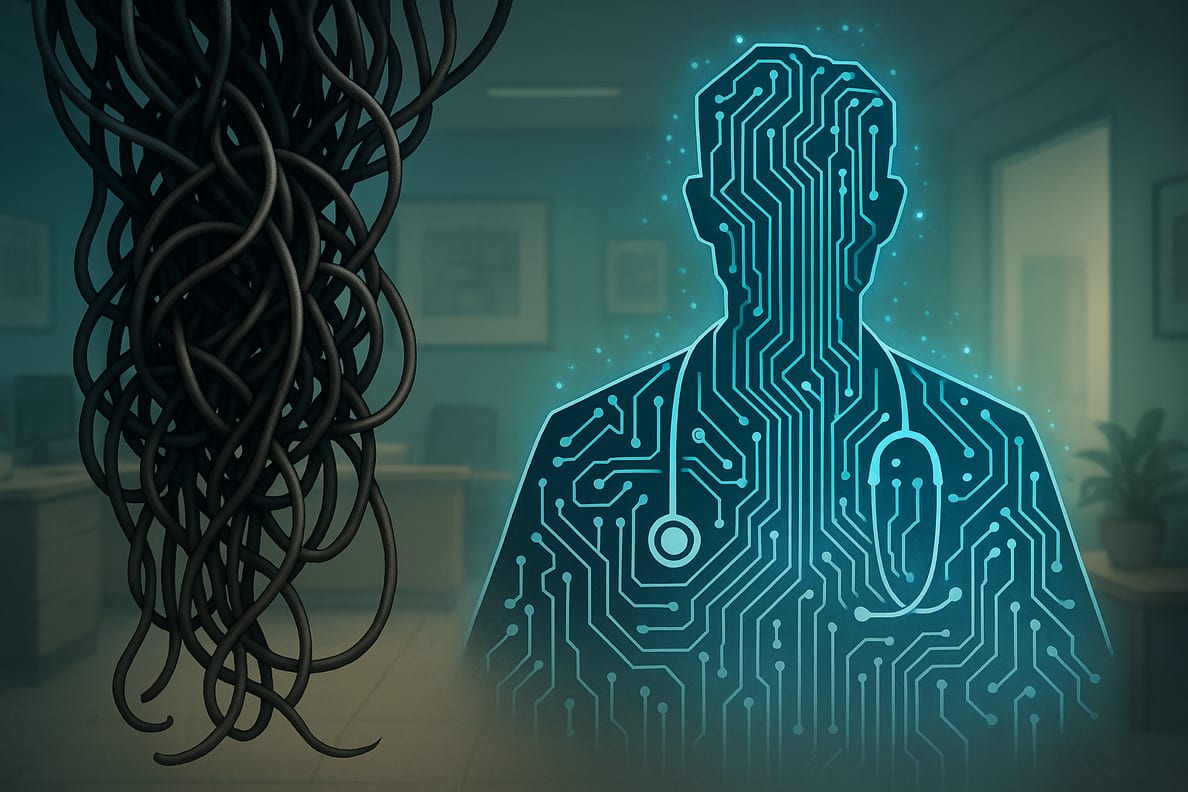
Most clinics don’t struggle because the medicine is poor. They struggle because the operations creak. The limiting factor is rarely clinical skill. It’s friction.
1. The Administrative Drain That Quietly Caps Revenue
Administration is the silent tax on every clinic. Scheduling, intake forms, invoicing, follow-ups, prescription queries, reports, letters, clinical documentation. Individually, none feels large. Collectively, they absorb hours. Administrative load is often the true ceiling on clinic revenue.
AI already makes a noticeable difference:
- Automated scheduling and rescheduling
- Drafting clinical notes from recordings
- Generating letters and templates
- Producing follow-up plans without manual entry
- Routing patient enquiries by topic
2. Friction in the Patient Journey
Most clinics don’t have a clear sense of where patients meet resistance. Every patient takes dozens of micro-steps. If any becomes confusing, slow, or unclear, patients quietly drop away. This is one of the biggest sources of lost revenue: not unhappy patients, but silent attrition.
AI can map the journey: where bookings are abandoned, forms get stuck, calls are missed, follow-up goes unread. Then AI helps smooth it:
- 24/7 booking and triage
- Personalised reminders
- Clear patient-friendly language
- Predict dropout risk
3. Protecting Clinician Time Without Losing the Human Touch
Clinicians are the engine of the clinic. When their time becomes dominated by tasks that don’t require medical expertise, capacity shrinks and burnout rises.
AI systems now act as additional hands:
- Drafting notes
- Preparing summaries
- Organising lab results
- Handling routine queries
- Tracking follow-up actions
This frees clinicians to focus on high-value interactions.
What to Fix First: A Data-Informed Approach
AI tools can highlight the single change that will create the quickest and largest improvement. Starting with the highest-impact bottleneck creates fast wins that build momentum.
Final Thoughts
Scaling a clinic is not about working harder. It’s about clearing the friction points. With the right AI support, clinics become more efficient, more personable, and better equipped to grow.